
For Acceleration of Wound Healing
Exo+ are involved in cell-to-cell interaction pathways with physiological and pathological function, possess immunomodulatory and immunosuppressive effects and activate angiogenesis, the proliferative phase, and epithelialization. Several studies have shown that stem cells and their exosomes can benefit wound healing. In addition to promoting cell proliferation and tissue regeneration, exosomes also reduce scarring, complications, and immune responses to graft materials.
Forms & Functions of Exosomes (EVs):
EVs are broadly categorized into small (exomeres (<50 mm), exosomes (<100 or 200 nm), and ectosomes (>200 nm).
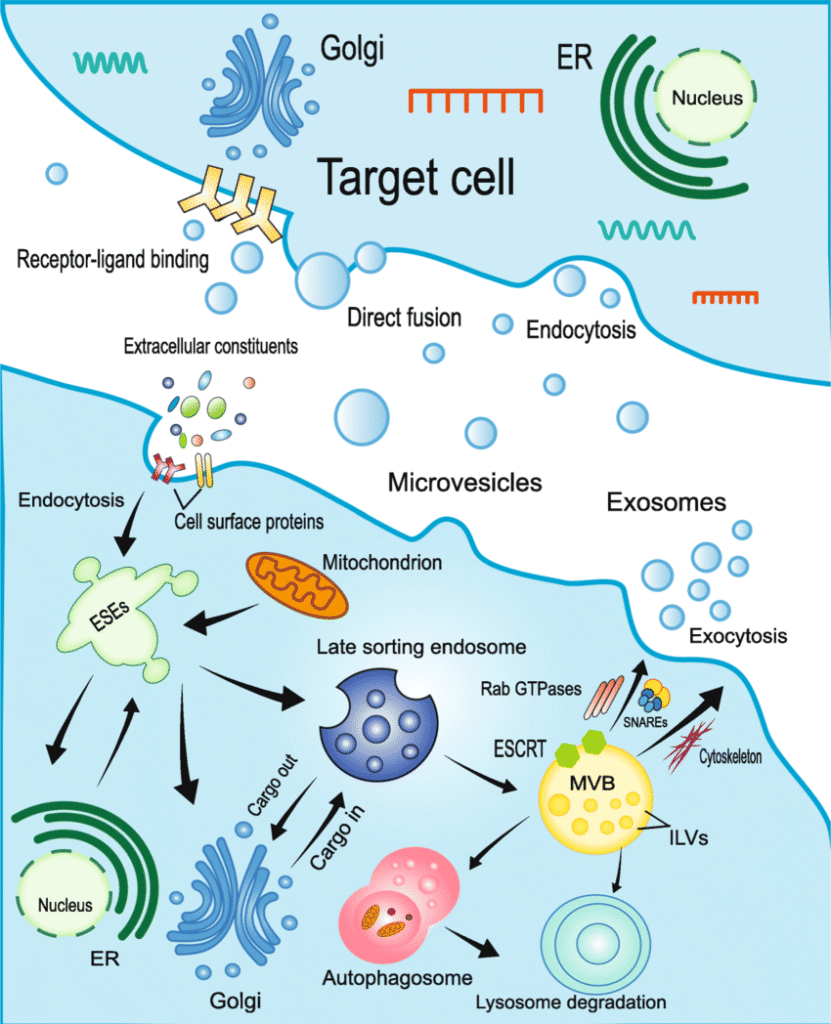
Exosomes evolve by sprouting as intraluminal vesicles (ILVs) within the luminal space of late endosomes or so-called multivesicular bodies (MVBs).
Exosomes therapy capitalizes on the body’s inherent regenerative capabilities. When applied to wounds, exosomes deliver their cargo of growth factors, cytokines, and nucleic acids directly to the damaged tissue. The intravesicular compartment of an exosome is enriched with signaling molecules, including nucleic acids (mRNA, miRNA, IncRNA), lipids, and proteins, while the outer membrane is composed of anchoring molecules, immune eliciting molecules, and lipid rafts. These components facilitate targeted delivery, accelerating cellular repair processes, enhancing tissue regeneration, and modulating inflamma-tion. This multifaceted approach leads to more effective and faster wound healing.